
We’ve been talking a lot about cortisol regulation lately. We’ve talked about what symptoms of high cortisol look like in women, how to avoid foods that raise our cortisol, how minerals and hydration play a part, how blood sugar and caffeine affect our cortisol, and how we can help reset naturally with herbs.
We know that learning how to lower cortisol naturally, is more than telling ourselves to “just relax.” Our bodies don’t respond to vague advice—they respond to signals.
I (Jen) have been really studying this because it sometimes feels like no matter what I do, I can’t turn the “cortisol switch” to the off position. I’ve learned that my nervous system is constantly asking:
- Am I safe?
- Can I slow down?
- Is it okay to rest and repair?
I can physically send those signals to my body in just a few minutes a day through simple movements, positions, and touch-based techniques. These techniques can help:
- lower cortisol levels
- regulate your stress response
- and bring your body out of that “tired but wired” state
In this post, I’ll walk you through the 7 simple ways to reset your nervous system naturally that I’ve been using—no supplements, no overwhelm, just practical tools that work with your body.
1. Legs Up the Wall (Viparita Karani)
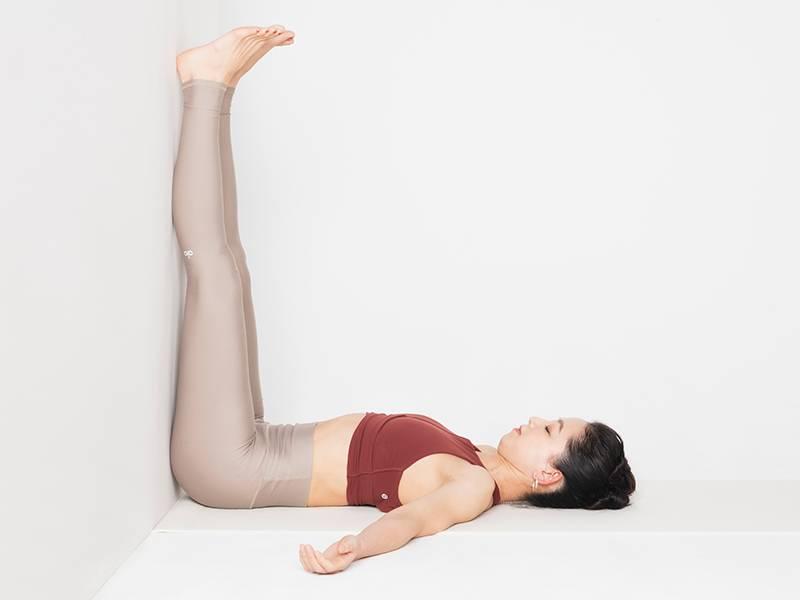
This one is my favorites for cortisol regulation because it’s one of the fastest ways to tell the body: “You’re safe now. You can slow down.” I do this one twice every day – in the morning and before bed at night.
By elevating your legs, you support circulation, reduce pressure on the heart, and activate the parasympathetic (rest-and-digest) response.
How to do it:
- Sit sideways next to a wall
- Gently swing your legs up as you lie back
- Rest your arms at your sides, palms up
- Stay for 5–10 minutes
Why it works:
It physically shifts your body into a position of rest, helping lower heart rate and quiet the stress response.
2. Tragus Pressure
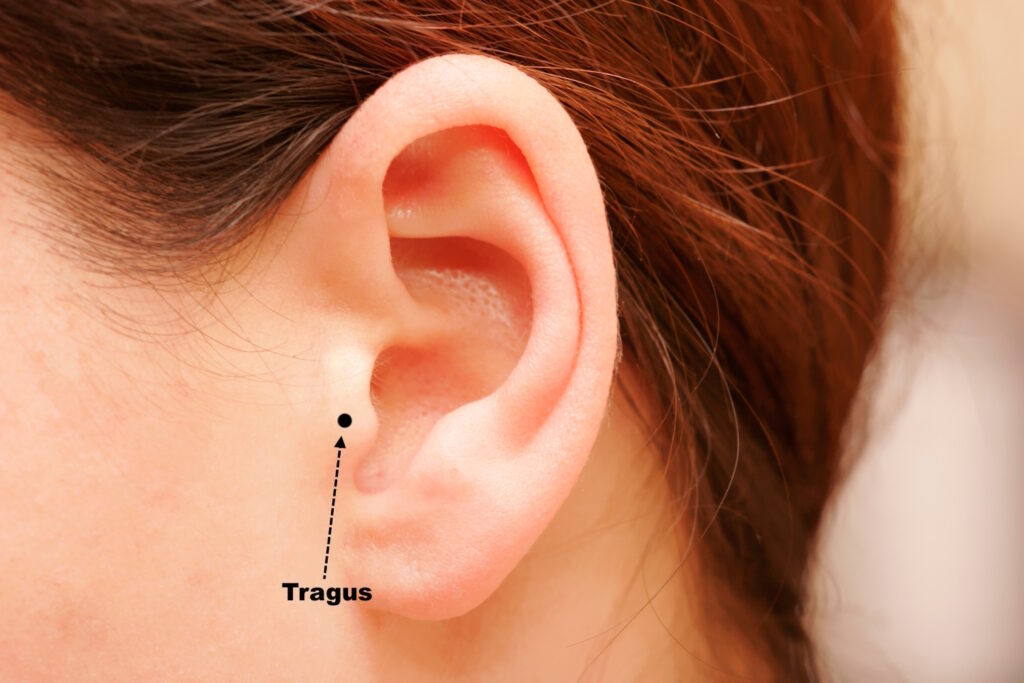
This is a new one for me and I’m excited to put it to the test.
There’s a small piece of cartilage on your ear that most people never think about—but it can become one of the simplest tools in your cortisol toolkit. It’s called the Tragus—the little flap right in front of your ear canal.
And when you gently press it, you’re sending a powerful signal to your nervous system: you’re safe… you can slow down.
How to do it:
- Use your thumb and index finger to gently press or hold the tragus
- Apply light, steady pressure (not forceful)
- Hold for 20–30 seconds while breathing slowly through your nose
- Repeat on both sides
What you may notice:
A deeper breath. A slight drop in tension. A feeling of your body beginning to settle.
Why it works:
The tragus sits near pathways connected to the vagus nerve—one of the main communication lines between your brain and body. When stimulated, it can help shift your body out of a stress response and into a more regulated, calm state.
A simple way to use this in real life:
- Before bed
- When you feel that “wired but tired” feeling
- In the car before walking into a stressful situation
Even though it takes less than a minute, it can still change the way your body responds in that moment.
3. Slow, Intentional Walking
Not power walking. Not “getting steps in.” This is intentional walking for cortisol regulation—slow enough that your body actually registers it as calming.
How to do it:
- Walk outside if possible (bonus for morning light ☀️)
- Keep your pace relaxed
- Let your arms swing naturally
- Breathe through your nose
Why it works:
Rhythmic movement paired with breath tells your nervous system that you’re not in danger. It’s one of the simplest ways to lower cortisol naturally.
4. Child’s Pose

I love this yoga pose for cortisol regulation and how peaceful if helps me feel. This posture is deeply grounding and protective—it mimics a position of safety.
How to do it:
- Knees wide or together, big toes together
- Fold forward and rest your forehead on the floor (or a pillow)
- Let your arms rest forward or alongside your legs
- Stay for 2–5 minutes
Why it works:
Pressure on the forehead and the curled position signal safety to the brain, helping reduce cortisol output.
5. Deep Breathing
If there’s one tool your body is already wired to respond to instantly, it’s your breath. You know we love to talk about deep breathing, and this is one more way it helps the body.
Not fast breathing. Not shallow chest breathing. But slow, deep, intentional breathing that tells your body: there’s no emergency here.
When your breath changes, your nervous system follows—and cortisol begins to come down.
How to do it:
- Place one hand on your chest and one on your belly
- Inhale slowly through your nose for 4 seconds
- Let your belly expand (not your chest)
- Hold for 4 seconds
- Exhale slowly through your nose or mouth for 6–8 seconds
- Hold for 4 seconds
- Repeat for 2–5 minutes
A simple rhythm to follow:
- Inhale: 4
- Hold
- Exhale: 6–8
- Hold
(The longer exhale is key—it’s what signals your body to relax.)
What you may notice:
Your shoulders drop, your thoughts slow, and your body begins to shift out of that “on edge” feeling.
Why it works:
Your breath is directly connected to your nervous system. Slow, controlled breathing activates the parasympathetic response—the state where your body can repair, digest, and rebalance hormones.
Make this part of your day:
- Before meals (to support digestion + blood sugar stability)
- Before bed (to calm that nighttime cortisol spike)
- Anytime you feel overwhelmed
This is one of the simplest tools you’ll ever use…and one of the most powerful when practiced consistently.
6. Deep Squat Hold (Grounding the Body)
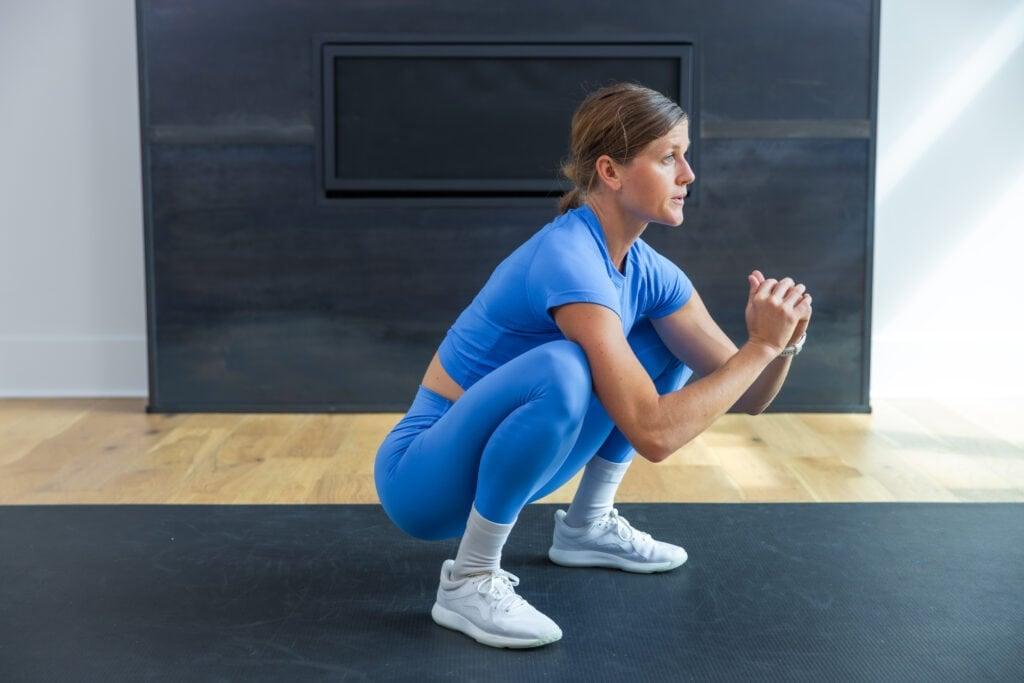
I call this the Yogi Squat. This is a natural human resting position, and great for cortisol regulation—but most of us have lost it.
How to do it:
- Stand with feet slightly wider than hips
- Lower into a squat (use support if needed)
- Keep your chest lifted
- Rest your elbows on your knees
If you fall over the first time you try this (that may or may not have happened to me…) try spreading your feet out further to give you a wider base and try again. (Thank goodness no one was filming me while I was trying to figure this out! It took me a few tries, but I got it in the end.)
Why it works:
It reconnects you to the ground, stabilizes the pelvis, and signals safety through physical grounding.
7. Hands on the Body (Simple, but Powerful)
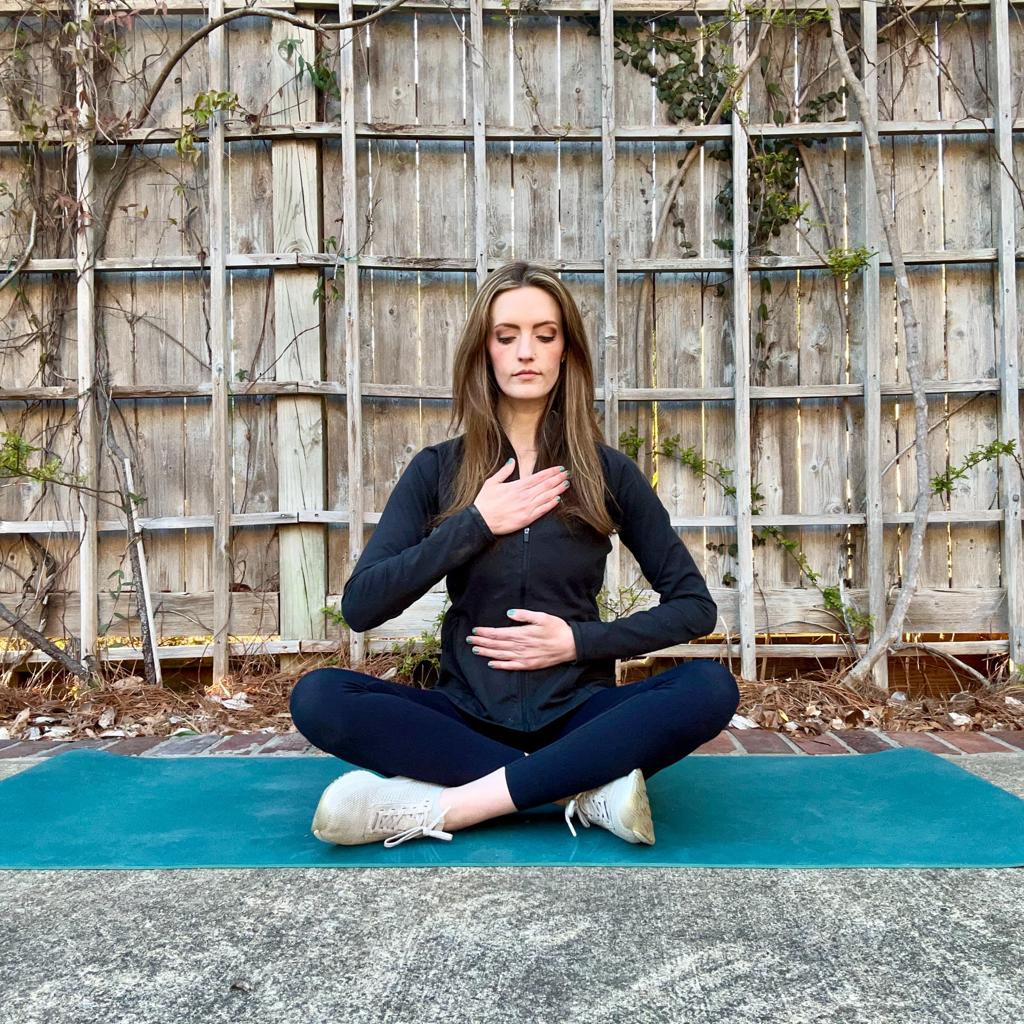
This one is almost too simple—which is why it’s often overlooked.
How to do it:
- Place one hand on your chest, one on your belly
- Close your eyes
- Breathe slowly and deeply for 2–3 minutes
Why it works:
Physical touch communicates safety faster than thoughts ever could. It lowers cortisol and increases oxytocin—your calming, connecting hormone.
Bringing It All Together
Learning how to lower cortisol naturally doesn’t require a complete life overhaul. It starts with small, consistent signals that tell your body: you’re safe now.
Whether it’s legs up the wall, or moving into gentle ear acupressure, or even simply placing your hands on your body while taking a slow, deep breath, each of these practices works together to gradually shift your nervous system out of stress mode and into healing.
Start with one. Stay consistent. And let your body remember what calm actually feels like.


Pingback: 5 Simple Evening Habits to Lower Cortisol and Sleep Deeper - DIY Holistic Solutions