
If you’ve been working on your hormones like I (Jen) have but still feel tired, wired, anxious, or off… I want to talk about something that often gets missed – minerals and hydration.
I didn’t always realize how big this piece was. But the more I’ve worked through cortisol recovery (and helped other women do the same), the more I’ve seen this pattern: You can be doing all the right things… but if your body is depleted at a mineral level, it’s going to stay in stress mode.
How Minerals and Hydration Affect Cortisol
When your body is under chronic stress, it doesn’t just produce more cortisol.
It also burns through minerals faster.
Especially:
- Magnesium (your calming mineral)
- Sodium (supports adrenal function and fluid balance)
- Potassium (helps regulate energy and nerve signals)
At the same time, stress often leads to dehydration at the cellular level.
Here’s what most people don’t realize – when your body is under-hydrated or mineral-depleted, it sees that as stress. And what does your body release in response to stress? Cortisol.
So the cycle continues. Low minerals → higher cortisol → more depletion → more symptoms
What This Feels Like in Real Life
This doesn’t usually show up as something obvious like “I’m dehydrated.”
It looks like:
- Feeling tired but wired
- Afternoon energy crashes
- Craving salt or sugar
- Headaches or lightheadedness
- Anxiety that seems to come out of nowhere
- Poor stress tolerance
- Trouble sleeping (especially waking at night)
And for me, there was another sign I didn’t understand at the time…
I was getting charlie horses in my feet all the time—especially at night. The kind that stop you in your tracks and make you jump out of bed. All I’d do was roll over or stretch a little bit and I’d get a charlie horse that wouldn’t go away for what felt like hours.
I didn’t connect it right away, but that was one of my body’s clearest signals that I was low in key minerals, especially magnesium and potassium.
Once I started supporting those consistently, those cramps almost completely disappeared.
Why Drinking More Water Isn’t Enough
This is where a lot of women get stuck. They think: “I just need to drink more water.”
But plain water alone—especially in large amounts—can actually dilute your minerals further. Your body doesn’t just need water. It needs hydration with minerals so that fluid can actually get into your cells and do its job.
How to Support Cortisol with Minerals and Hydration
If you want to start lowering cortisol naturally, this is one of the simplest places to begin.
Here are a few things I personally focus on:
1. Add minerals to your water
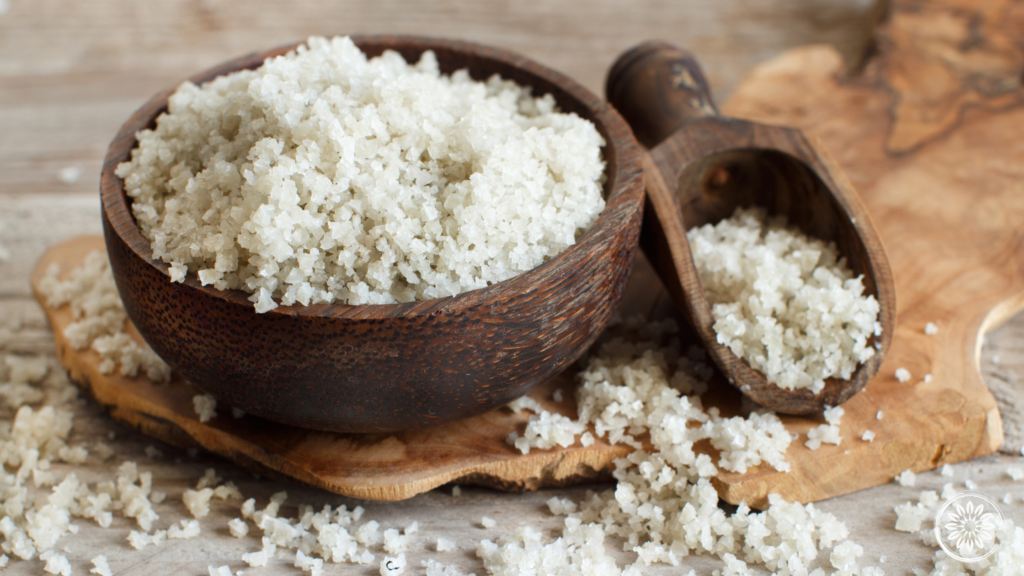
A pinch of high-quality sea salt or a mineral mix in your water bottle can make a big difference in how your body stays hydrated.
2. Don’t skip meals (especially with protein + carbs)
Balanced meals help stabilize blood sugar, which directly impacts cortisol.
3. Start your day with hydration first
Before caffeine, give your body water with minerals to support your adrenals.
4. Pay attention to your body’s signals
Cravings for salt, fatigue, dizziness—or even muscle cramps—are often signs your body needs support, not restriction.
5. Be consistent, not extreme
This isn’t about overloading supplements. It’s about daily, steady support.
If You’re Trying to Lower Cortisol Naturally…
Don’t skip this step. Minerals and hydration aren’t flashy—but they are foundational. And in many cases, they’re the reason your body hasn’t been able to fully settle yet.

This post may contain affiliate links.
