Episode Summary:
Do you ever feel completely exhausted all day, only to find yourself wide awake when it’s finally time to sleep? We call that “tired but wired”.
In this episode of Hormone Health for Real Life, Jen and Jennah dive into one of the most common complaints they hear from women: feeling “tired but wired.” If you’ve ever struggled with racing thoughts at bedtime, waking up between 2–3 a.m., feeling anxious for no reason, or dragging through the day despite being exhausted, you’re not alone.
The truth is that many women are living in a state of chronic nervous system overload. Modern life places physical, emotional, and mental demands on us that our bodies were never designed to carry nonstop. Over time, this can disrupt cortisol rhythms, affect blood sugar balance, increase anxiety, impact sleep quality, and leave us feeling stuck in survival mode.
In this episode, we explore the hidden stressors contributing to nervous system dysregulation and share practical, realistic strategies to help your body feel safe again.
What You’ll Learn on this Episode:
- Feeling tired but wired is often a sign of nervous system overload and disrupted cortisol rhythms.
- Hidden stressors like overstimulation, blood sugar swings, and decision fatigue keep the body stuck in survival mode.
- Start your day with a few quiet minutes before reaching for your phone.
- Prioritize protein first thing in the morning to support blood sugar and cortisol balance.
- Get outside for morning sunlight to improve energy, sleep, and hormone regulation.
- Small daily habits help your body feel safe, calm cortisol, and restore healthy rhythms.
Mentioned on the Show:
- Free Download: 7 Easy Physical Ways to Turn Off Cortisol
- Discover simple yoga poses and physical techniques that help signal safety to your nervous system and calm stress naturally.
- Free PDF: Recharge with the Six Basics
- Sometimes the smallest changes can make a massive difference. That’s what these 6 revitalizing habits are all about.
- Check out our Website: DIYHolisticSolutions.com
Enjoy the Show?
- Don’t miss an episode. Follow us on Spotify, Apple Podcasts, or RSS
- Leave us a review on Apple Podcasts
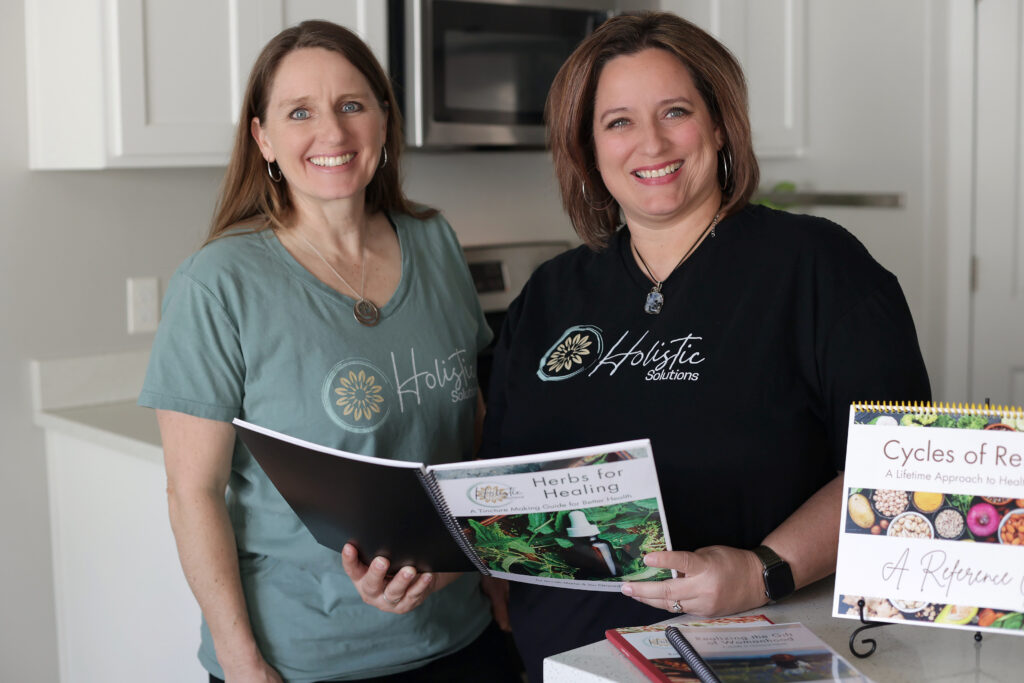
Hi! We’re Jennah & Jen
We’re each the mother of six children, natural health educators, and co-founders of Holistic Solutions. After decades of homeschooling, raising families, and studying natural wellness, we discovered powerful principles that transformed our own health journeys. Through Hormone Health for Real Life, we help women simplify hormone health, calm their nervous systems, and build sustainable habits that support lasting wellness.